Using GPT-5 and OpenAI o3 in Unreal Engine
OpenAI's latest models — GPT-5, GPT-4o, o3, and o4-mini — represent the current frontier of AI capability. GPT-5 is the most capable general model, while o3 and o4-mini are "reasoning" models that think step-by-step through complex problems. Both are now available in Unreal Engine.
GPT-5 vs o3: Which Should You Use?
- GPT-5 / GPT-4o — Best for creative writing, dialogue, narrative, and general conversation. Fast response times. Ideal for NPC dialogue, lore generation, and player-facing interactions.
- o3 / o4-mini — Best for complex reasoning, puzzle logic, game rules, and structured output. Slower but more accurate for tasks requiring multi-step thinking. Ideal for AI game masters, strategy evaluation, and procedural quest logic.
What You Can Build
- GPT-5 NPC dialogue — characters with personality, memory, and emotional range that respond to world state
- o3-powered game masters — AI that reasons about game balance, player skill, and narrative pacing to create dynamic experiences
- Structured content generation — valid JSON for inventory items, quests, skill trees, and game events using function calling
- Real-time voice conversations — OpenAI's Realtime API for voice-to-voice NPC interactions
- Image generation — DALL-E and GPT-Image-1 for runtime asset creation
- Multimodal input — send screenshots or textures to GPT-4o Vision for analysis
Advanced Features
- Function calling — let GPT-5 trigger in-game actions: open doors, spawn enemies, change weather
- Structured JSON output — guarantee valid JSON responses with schemas
- OpenAI Responses API — the latest API with built-in tool use and web search
- Streaming — word-by-word response delivery for typewriter effects
- Conversation history — multi-turn dialogue with automatic context management
Integration
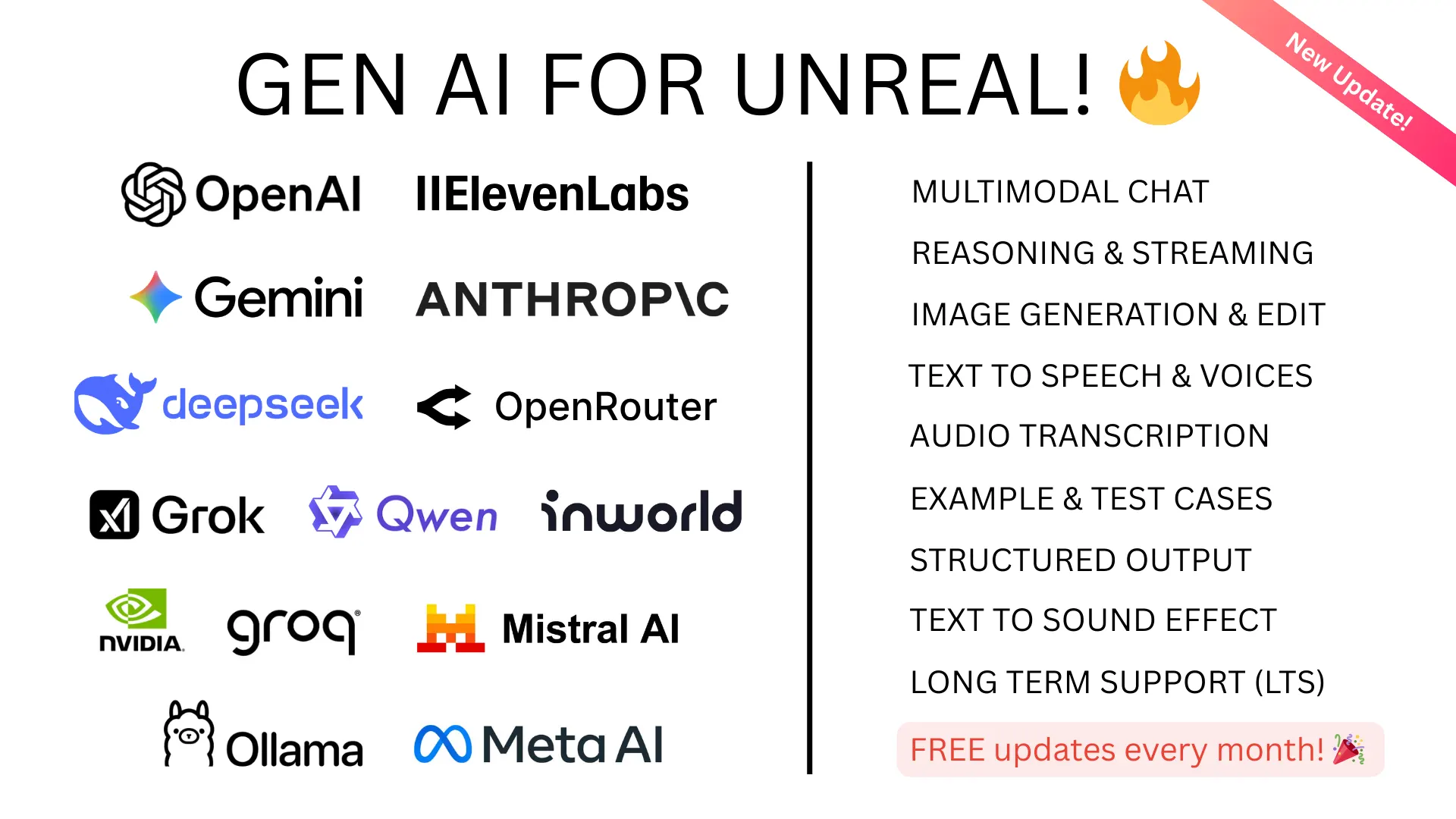
GenAI for Unreal supports the full OpenAI API — GPT-5, GPT-4o, o3, o4-mini, DALL-E, GPT-Image-1, TTS, Whisper, and the Realtime API. Updated within days of new model launches.