Using Claude Opus 4 and Sonnet 4 in Unreal Engine
Anthropic's Claude models are known for nuanced, thoughtful, and character-rich text generation. Claude Opus 4.6 is among the most capable AI models available, while Claude Sonnet 4.6 offers an excellent balance of quality and speed. Both are available in Unreal Engine for game development.
Why Claude for Games?
- Character depth. Claude excels at maintaining consistent character voices, personalities, and emotional arcs across long conversations. NPCs feel like real characters, not chatbots.
- Instruction following. Claude is exceptionally good at following complex system prompts that define character behavior, world rules, and conversation boundaries.
- Safety. Claude's built-in safety features help keep NPC conversations appropriate, reducing the risk of AI-generated content that breaks immersion or causes issues.
- Long context. Claude supports very long context windows, enabling NPCs with deep memory of past player interactions.
- Vision. Claude can analyze images — send screenshots, textures, or concept art alongside text prompts.
Claude Opus vs Sonnet
- Claude Opus 4.6 — Maximum quality. Best for critical moments: climactic dialogue, complex narrative decisions, detailed world-building. Higher cost, slower.
- Claude Sonnet 4.6 — The practical choice. Fast enough for real-time gameplay, high enough quality for player-facing dialogue. Best quality-per-dollar for most game applications.
What You Can Build
- Deep NPC conversations — multi-turn dialogue where characters remember context and respond in-character
- Narrative AI — dynamic story generation that maintains consistency across branching paths
- AI writers — generate quest text, item descriptions, and lore that reads like professional game writing
- Content moderation — use Claude to review player-generated content for appropriateness
- Game design assistants — Claude helps designers iterate on dialogue, world-building, and systems design
Integration
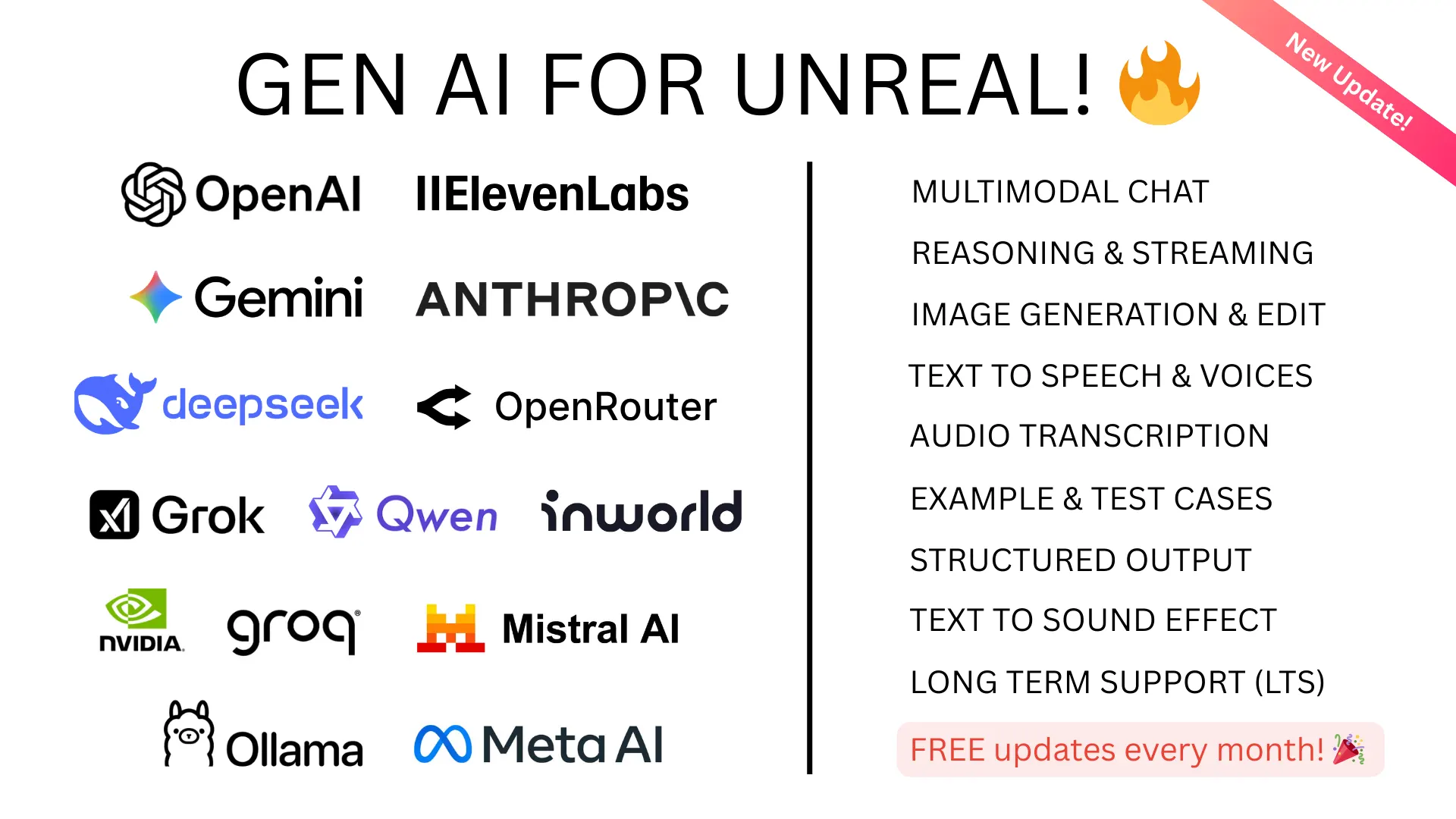
GenAI for Unreal supports the full Anthropic Claude API — Opus, Sonnet, and Haiku — with streaming, vision, and conversation history management. Works alongside OpenAI, Google, and other providers in the same project.