AI Quest Generation in Unreal Engine
Handcrafted quests are expensive to produce and finite in quantity. Players finish them and the content is gone. LLM-powered quest generation creates unique, narratively coherent missions that respond to the player's history, choices, and current game state — infinitely.
How AI Quest Generation Works
- Context injection. Feed the LLM your world lore, faction states, player inventory, completed quests, and current location.
- Structured output. Use JSON schemas or function calling to get structured quest data — objectives, rewards, NPC involvement, difficulty rating.
- Narrative coherence. The LLM ensures generated quests reference existing characters, locations, and ongoing storylines rather than generating disconnected content.
- Difficulty scaling. Reasoning models like o3 or DeepSeek R1 can evaluate player skill and gear level to generate appropriately challenging encounters.
Example Output
With structured JSON output, an LLM returns quest data your game systems can directly consume:
{
  "quest_name": "The Miller's Secret",
  "description": "The old mill has been grinding after hours...",
  "objectives": [
    {"type": "investigate", "location": "old_mill", "description": "Search the mill at night"},
    {"type": "defeat", "enemy": "grain_golem", "count": 1},
    {"type": "deliver", "item": "strange_grain", "npc": "herbalist_mara"}
  ],
  "rewards": {"gold": 150, "xp": 300, "item": "enchanted_millstone"},
  "difficulty": "medium",
  "faction_impact": {"miller_guild": -10, "herbalists": 15}
}
Best Models for Quest Generation
- GPT-5 / Claude Opus — best creative quality for narrative-rich quests
- o3 / DeepSeek R1 — best for balanced, logically consistent quest design
- Llama 3.1 8B (local) — good enough for routine quests, zero API cost
- Gemini 3.1 — massive context window for remembering entire quest histories
Make Generated Quests Feel Handmade
- Add constraints, not just prompts: enforce allowed locations, item pools, and faction relationships.
- Track quest fingerprints: store objective patterns and reject repeats too similar to recent quests.
- Separate writing from validation: first generate narrative draft, then run a second pass that checks logic and rewards.
- Respect pacing: cap high-stakes quests per hour and inject short utility quests between them.
Runtime Safety Checks
- Verify every generated target (NPC, location, item) exists before publishing the quest.
- Clamp rewards to economy rules to avoid inflation exploits.
- Provide a fallback template quest if validation fails.
- Log rejected generations to refine your prompts and schema over time.
Tools
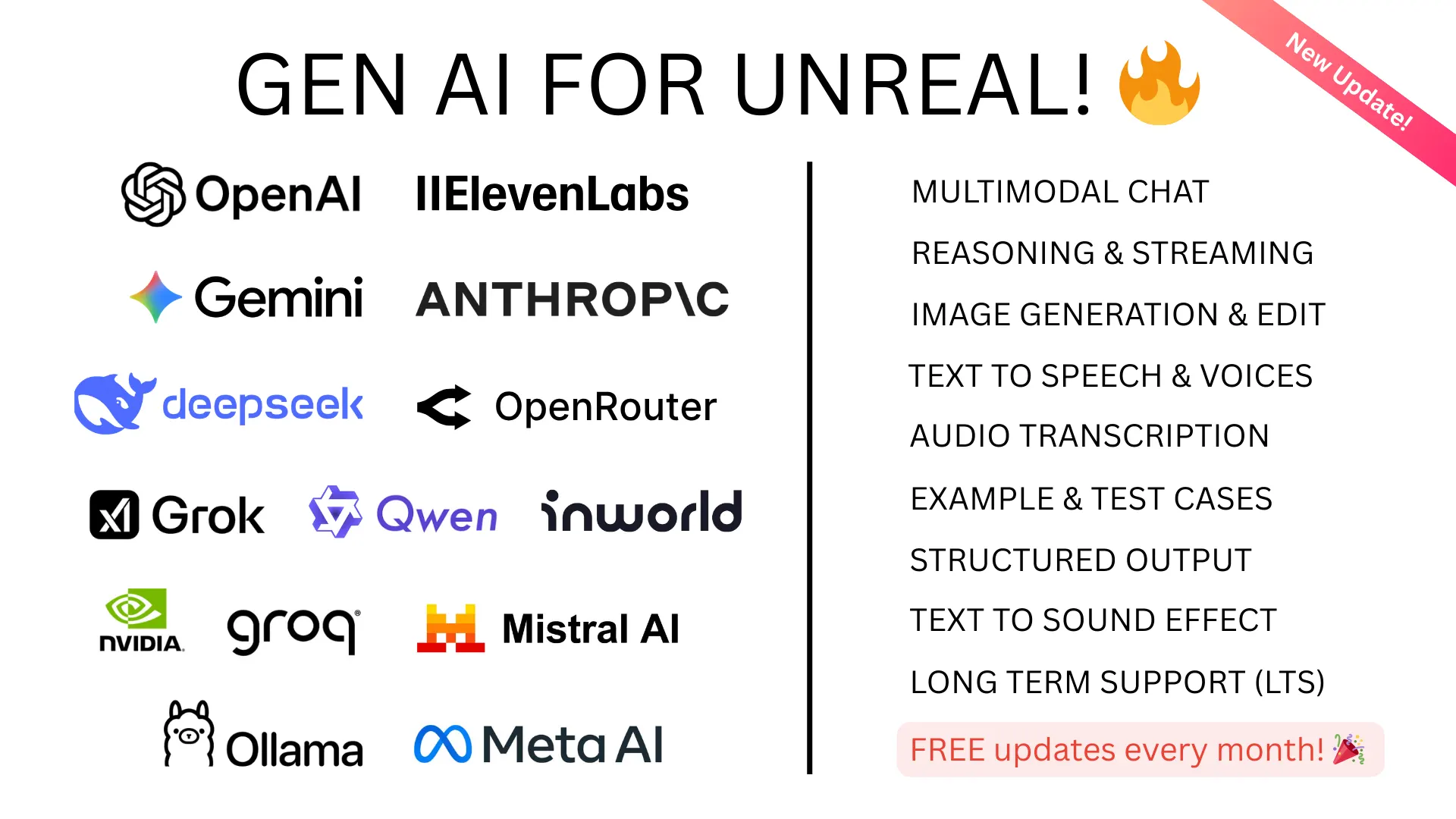
GenAI for Unreal provides structured JSON output, function calling, and streaming across all major providers. For offline quest generation, GenAI Llama runs open-source models locally.